
LITTLE ROCK SCHOOL DISTRICT READY FOR LEARNING PLAN
IN RESPONSE TO COVID-19 FOR THE 2022-2023 SCHOOL YEAR

Table of Contents
| SECTION I: SAFETY OF STUDENTS, STAFF, AND VISITORS | 3 |
| Support Needed from Parents and Guardians | 3 |
| Visitors | 4 |
| Travel Restrictions | 4 |
| Employee Health Screening and Protocols | 4 |
| Health Protocol | 5 |
| CONFIRMED COVID-19 CASE AND ISOLATION PROTOCOL | 5 |
| Safety Precautions | 5 |
| Personal Workspace/Shared Workspace | 5 |
| General Disinfection Protocol | 6 |
| Deep Cleaning and Disinfection Protocols | 6 |
| Bus Driver/Bus Protocols | 6 |
| Locker Rooms | 6 |
| Emergency School Drill Procedures | 6 |
| Social Emotional Well-Being of Students and Staff | 6 |
| Student Conduct Expectations | 7 |
| Staff Training | 7 |
| Communication Methods | 7 |
| SECTION II: ACADEMICS | 8 |
| Pre-K | 8 |
| K-12 | 8 |
| Ignite Digital Academy | 8 |
| In-Person Learning | 9 |
| Student Learning Choice | 9 |
| Grading Policy | 10 |
| Student Services/Special Programs | 10 |
| Alternative Agencies | 12 |
| SECTION III: HUMAN RESOURCES | 13 |
| COVID-19 Leave and Protocols | 13 |
| SECTION IV: EXTRACURRICULAR | 13 |
| APPENDIX | 13 |
| RESOURCES, SUPPORTS, & FUNDING PLANS | 15 |
| ESSER I: The Cares Act For The Elementary And Secondary School Emergency Relief (ESSER) | |
| Fund | 16 |
| LITTLE ROCK SCHOOL DISTRICT EXPENDITURES | 17 |
| Elementary & Secondary School Emergency Relief (ESSER II) | 18 |
| The American Rescue Plan: Elementary & Secondary School Emergency Relief (ARP ESSER) | 19 |
INTRODUCTION
The Little Rock School District's Ready for Learning Plan was developed with input from parents, students, teachers, administrators and district level staff. Those who expressed interest in the initial parent/teacher survey and provided an email address were invited to participate in follow-up focus groups as the plan was developed. This plan was intended to aid in guiding the reopening of our school buildings. The guidelines referenced in this plan are based on guidance from the Arkansas Department of Elementary and Secondary Education (DESE) and Arkansas Department of Health (ADH). Regular updates to this plan will be based on information provided by the ADH, DESE, and applicable federal, state and local agencies.
The LRSD Ready For Learning Plan has been revised to include the ESSER funding support programs/ initiatives and the expenditures.
COMPONENTS OF THE LRSD READY FOR LEARNING PLAN
In order to ensure the continued well-being of our LRSD community, the following guiding principles have been put in place:
Ensure a safe learning environment based upon the most current guidance from the Arkansas Department of Health (ADH);
Ensure the continuity of teaching and learning by providing a guaranteed and viable curriculum that addresses unfinished learning from the prior year, introduces new learning while utilizing technology to enhance regular classroom instruction;
Upon family request for students to engage with remote learning, support teachers in providing virtual instruction by providing training in technology blended learning (delivery of instruction), addressing social and emotional needs of students and self, and culturally responsive practices;
Provide guidance and support for educators, parents and students in the areas of health, safety, and social emotional learning;
SECTION I: SAFETY OF STUDENTS, STAFF, AND VISITORS
Support Needed from Parents and Guardians
Ensure that your student(s)' are up-to-date immunizations/ wellness checks
Provide updated immunizations and required assessments to the school nurse
Check in with your child each morning for signs of illness. If your child has a temperature of 100.4 degrees or higher, they should not go to school. If your child has symptoms such as sore throat or other signs of illness, such as a cough, diarrhea, severe headache, vomiting, or body aches please have your child stay home until they can be evaluated by their Primary Care Physician.
Be familiar with your schools plan for how they will communicate with the family of a student who has tested positive for Covid-19.
Please take the time to update your contact information in and join Schoology once ParentLink access codes have been provided by your child's teacher. In the ParentLink portal, you may select your preferred method of contact by the District: phone, email, text, LRSD APP or a combination. LRSD will only override your settings in cases of emergency.
Visitors
LRSD has no current restrictions for visitors to campuses and facilities. Visitors should follow standard procedures for access and entry to district buildings, including check-in with school main offices.
Travel Restrictions
LRSD now permits employees to participate in out-of-state travel to conferences and workshops. Out-of-state travel for student-related activities is now permitted. The District strongly encourages students and employees to adhere to all safety precautions while traveling. Out-of-state travel must be approved by the Superintendent.
CLARIFICATION AND PROBLEMS IDENTIFIED IN COVID-19 CASE MANAGEMENT BY THE DISTRICT POINT OF CONTACT (POC) TEAM
The Health Services Department in LRSD will notify Principals, if there is a positive COVID-19 case on their campus or if a parent notifies the Health Services Team. Employees are to notify their principals or school nurse who will submit the report to the Health Services Department for further investigation.
Encourage your staff to answer calls from 501-447-7387.
Staff should not come to work sick.
Employee Health Screening and Protocols
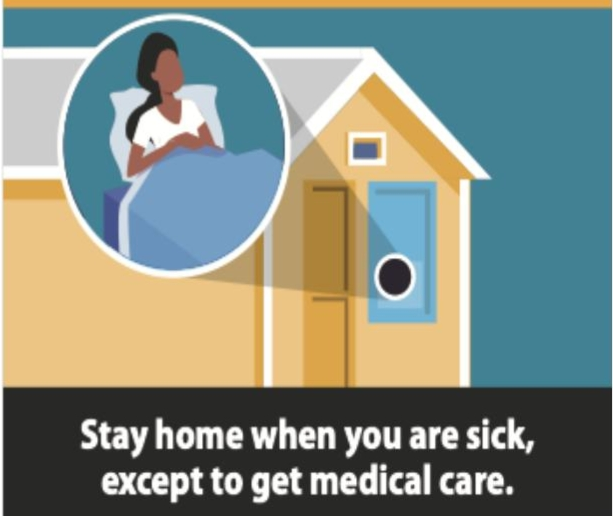
Although employees typically come to work even when they feel sick, in this environment, it is imperative that employees stay home, if they exhibit any of the COVID-19 symptoms. Employees are to contact their Primary Care Physician (PCP) to determine if testing is needed. Voluntary weekly Covid screening will be provided for asymptomatic employees at each school.
The signs and symptoms of COVID-19 include:
Feeling feverish or a measured temperature greater than or equal to 100.4 degrees Fahrenheit
Cough
Shortness of breath or difficulty breathing
Chills
Repeated shaking with chills
Muscle pain
Headache
Sore throat
Loss of taste or smell
Diarrhea
Employee medical information must remain confidential. LRSD will not share the name of any employee with a confirmed or suspected COVID-19 diagnosis.
Health Protocol
Employees with a potentially infectious disease are to stay home, i.e. symptoms of fever, chills, severe body aches, a new and worrisome cough. Employees with chronic health conditions are expected to work as long as their symptoms are controlled and do not interrupt their ability to work.
CONFIRMED COVID-19 CASE AND ISOLATION PROTOCOL
If an employee is diagnosed with COVID-19, they are to notify their supervisor and school nurse. The nurse will then contact the Health Services Department at covidpoc@lrsd.org
LRSD will adhere to the most current guidance regarding the release from isolation when an individual has tested positive for COVID-19.
If a student is diagnosed with COVID-19, he/she (or the parent/guardian) should contact the school attendance secretary immediately. The attendance secretary will inform the principal and school nurse. The school nurse will then contact the Director of Health Services,
Safety Precautions
Good hand hygiene; wash your hands often with soap and water for at least 20 seconds. (Guide Use hand sanitizer with at least 60% alcohol, if soap and for proper handwashing techniques) water are not available;
Avoid touching your face;
Cover mouth and nose when coughing or sneezing or use the inside of your elbow;
Monitor for signs and symptoms of COVID-19.



Personal Workspace/Shared Workspace
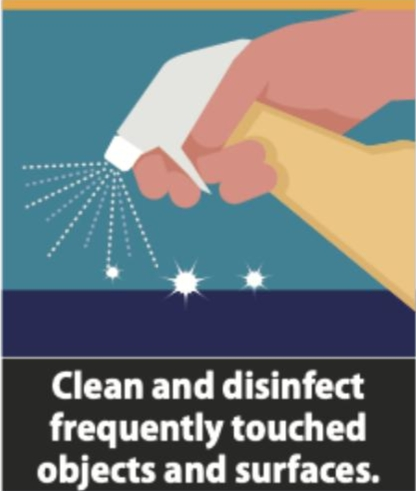
LRSD is committed to providing a safe and clean environment. The building custodial staff will clean and disinfect workspaces at the designated cleaning time; however, employees are encouraged to disinfect their own personal workspace (teacher desk, phone, etc) throughout the day, giving special attention to commonly touched surfaces.
General Disinfection Protocol
General cleaning and disinfection protocols will be required to be followed daily by all custodial staff members. Added safety procedures for the disinfecting process during the COVID-19 pandemic include the following:
Disposable gloves are to be worn to perform each of the following tasks and should be removed immediately after, handwashing is also required before and after wearing gloves:
– EACH Classroom cleaning
– EACH Restroom cleaning
– Floor mopping
– Office cleaning
Properly labeled spray bottles (containing EPA, CDC, and the ADH approved disinfectants) are to be utilized to disinfect.
Utilize a two-rag/ two-step protocol for disinfection.
The following items have been purchased for use in the classrooms and restrooms: hand sanitizer, disinfectant wipes, paper towels, and soap.
Cleaning Checklist will be provided for the custodial staff and school administration; the checklist will be kept in the individual classrooms.
All spaces will be cleaned on a daily basis.
All water fountains will not be utilized. Staff and students are encouraged to bring water bottles filled with water. Water bottles will be provided by the District, if needed.
Buckets used to disinfect mop should be changed after each restroom cleaning is performed.
Deep Cleaning and Disinfection Protocols
Deep cleaning and disinfecting protocols are initiated when an employee or student is identified as positive for COVID-19 based on testing. The District has contracted with an outside cleaning company to provide additional deep cleaning and disinfecting at all District sites.
General disinfection measures will be taken with additional measures to electrostatically fog affected spaces with disinfecting equipment/chemicals will be performed after students and staff have left the building.
Bus Driver/Bus Protocols
LRSD will follow the guidelines. U.S. Department of Transportation
Locker Rooms
LRSD will adhere to all Arkansas Activities Association and ADH guidelines and directives pertaining to all extracurricular activities and physical education classes.
Emergency School Drill Procedures
Safety drills will continue to be conducted during the school year. The District's Safety and Security officers will disseminate the revised procedures for conducting the various safety drills, in adherence to the ADH guidance.
Social Emotional Well-Being of Students and Staff
Social and Emotional Learning (SEL) is the process through which children and adults understand and manage emotions, set and achieve positive goals, feel and show empathy for others, establish and maintain positive relationships, and make responsible decisions. Counselors, school social workers and
school based mental health professionals work to provide a Multi-Tiered System of Support (MTSS) for all students and staff in both the virtual and in-person learning environment.
Tier I- Support for All Students
LRSD understands the importance of ongoing professional development for all stakeholders to ensure capacity growth; therefore, the support will be scheduled throughout the school year.
Tier II- Intervention
Some students will need interventions to help them understand and be comfortable in this new normal.
Counselors will provide personal or group counseling to students based on needs assessment. Ex. Grief, divorce, social injustice, etc.
Counselors will determine if an additional mental health referral is needed. A referral process has been set up digitally.
Students who were seeing a mental health provider previously will continue with site-based home visits, or telehealth service.
Tier III- Intensive Support
LRSD will utilize needs assessments and work collaboratively with families to determine additional needs. For students who may need intensive support, the following will be provided:
The School-Based Intervention Team (SBIT) will meet to establish next steps to provide intensive support.
LRSD partners that may be utilized include: Living Hope, Life Strategies, and Centers.
The LRSD School Counseling Department utilizes the following SEL programs based on individual needs of students, school surveys, and grants they might have received. The list of possible programs : Near Pod, Leader in Me, Parenting Partners, PBIS, Ron Clark's Essential 55 Second Step, Quavar, and Counselor created lesson plans.
Student Conduct Expectations
Students in both learning (virtual and in-person) environments will adhere to all expectations/ guidelines that are listed in the LRSD's Student Handbook.
Staff Training
It is important that all employees understand the safety requirements, protocols and expectations to ensure everyone and their communities stay safe. and prevent the spread of the virus. A mixture of personalized and general ongoing professional development will be provided to all staff, as needed.
Communication Methods
LRSD will use a variety of methods to communicate to all stakeholders. To stay updated on the most up-to-date information:
Check email often;
website; Visit our district
Follow our social media platforms;
Check Schoology daily; and
Watch for messages via ParentLink (please ensure your contact information is current with your child's school).
The District's communication plan can be found here.
SECTION II: ACADEMICS
One of LRSD's primary concerns is that all students' academic needs are met. LRSD will offer two delivery options in K-12 classes: Virtual or In-person. All students will have the opportunity to use a District technology device (parents will be expected to complete a technology agreement) that is to be used to participate in lessons and complete assignments.
Additional instructional support staff such as City Year, tutors, mental health providers, etc. will continue to support students in both environments.
Pre-K
Students attending the LRSD Pre-K Program will attend in-person only. Students will engage in a full day of age appropriate instruction with a teacher and paraprofessional. Pre-K students will have access to the Pre-K Learning Management System, Seesaw for Schools. Seesaw is an on-line platform for student engagement. Teachers can empower students to create, reflect, share, and collaborate. Students will have age appropriate assignments to complete and upload to Seesaw periodically.
K-12
In both learning environments, student engagement and interaction with their assigned teachers is a critical part of an ideal learning environment. Students who are connected to their teacher(s) and peers regularly have a more rounded learning experience and are able to receive support as needed to further their learning.
K-12 teachers will utilize the district's Learning Management System (LMS), Schoology, regularly to enhance instruction and student engagement. Schoology was selected based on stakeholder input because it easily integrates with eSchool, provides a central location for communications between teachers and families, and allows for integration of resources into one place. More information about Schoology can be accessed here: Getting Started with Schoology.
Support for teachers will be provided by the Curriculum & Instruction (C&I) team regularly throughout the school year during collaborative team meetings, virtual support sessions and faculty meetings. Collaborative teams will work together to build common lessons, assessments and share resources.
Ignite Digital Academy
Ignite Digital Academy will be a quality choice, however parents are encouraged to carefully weigh the options of in-person and digital instruction. Students participating virtually will require more direct support from parents or guardians. The school will provide support and instruction, but will not have the same level of direct supervision of students working on assignments. The bullets below further outline the virtual learning experience.
Teacher-created lessons: Teachers will have the autonomy and support to utilize the District-provided and State-provided instructional resources, along with instructional resources of their choice, to develop lessons for both their virtual and in-person students. Lessons and assignments will be uploaded to Schoology. Teachers will cover the Arkansas State Standards in their instructional lessons.
Course Selections: Students will have the opportunity to enroll in the same courses (electives, AP, regular courses) regardless of their mode of delivery and may participate in any extracurricular activities. Electives/Speciality classes will be available in this learning environment. More information is available in the Extracurricular section of this plan.
Student/Teacher Interaction: Video conferencing will be required; Schoology has a video
conferencing interface similar to Zoom; this is available for teachers to conduct live instructional lessons or interventions with their students. Students will have interaction with their teachers daily based on a set schedule that will be provided. Teachers will monitor student learning and engagement via Schoology as well as hold virtual sessions with students in whole group, small group or one-on-one settings.
Lessons and Grades: Schoology will be utilized for all resources/lessons/assignments; assignments can also be graded in the platform. Teachers will provide daily assignments and assessments regularly via Schoology. Students will be expected to login to Schoology daily as attendance will be taken based on student access and completion of daily assignments. A student must log in prior to midnight on school days. Grades will be taken on assignments required by their teacher. More information about grades can be found in the Grading section below.
Devices and Connectivity: LRSD will provide a device for any student who needs one in order for them to participate in virtual learning. The district is currently working with multiple partners to find solutions to broadband connectivity.
Student Engagement: Students who are not engaging in the learning will be supported according to the building's established Virtual Learning protocol. Students who are not successful in the virtual environment for attendance, lack of engagement, or other factors will be monitored and supported or change of delivery mode should be considered.
In-Person Learning
K-12: Families who choose in-person instruction will also be choosing to follow the safety protocols established for on-site instruction. The bullets below further outline the in -person learning experience.
Schedules: Middle and High schools will implement a A/B block schedule to continue to minimize student movement. Teachers will provide instruction based on a set schedule and students will change classes according to the building's plan. Each elementary school will set a schedule for their building.
Teacher-created lessons: Teachers will have the autonomy and support to utilize the District-provided and State-provided instructional resources, along with instructional resources of their choice, to develop lessons for in-person students. Lessons and assignments will be uploaded to Schoology.
Course Selections: Students will have the opportunity to enroll in the same courses (electives, AP, regular courses) regardless of their mode of delivery and may participate in any extracurricular activities. Electives/Speciality Classes will be available in this learning environment. Electives will be available in the in-person learning environment, in adherence to the current Arkansas Department of Health guidance. More information is available in the Extracurricular section of this plan.
Lessons and Grades: Schoology will be utilized for all resources/lessons/assignments; assignments can also be graded in the platform. Teachers will provide daily assignments and assessments regularly via Schoology.
Devices and Connectivity: LRSD will provide a device for any student who needs one in order for them to participate in learning.
Student Learning Choice
Students will be required to remain in their chosen learning environment until the end of the semester. Students will be able to request to be moved between digital and in-person instruction. All efforts will be made to provide a smooth transition; however, depending on the grade level and content area, the teacher of record may or may not remain the same.
The parent or guardian should make a request in writing to the child’s principal requesting the change in delivery method that includes the reason for the requested change. The change request will be reviewed by the principal or designee to determine the feasibility of the requested change. The parent/guardian will be notified of next steps. The child will continue to participate in the original mode of delivery until the request has been finalized and the parent notified of the change.
Remote Learning
In the event that the district is required to implement remote learning district-wide or in one building, teachers will provide lessons/assignments and monitor student learning and engagement via Schoology as well as hold virtual sessions with students in whole group, small group or one-on-one settings. Teachers will provide daily assignments and assessments via Schoology. Students will be expected to login to Schoology daily and attendance will be taken based on student access and completion of daily assignments. Grades will be taken on assignments required by their teacher. Students who are not engaging in the learning will be supported according to the building's established Virtual Learning protocol. Students will remain enrolled in all their courses and will have interaction with their teachers daily based on a set schedule that will be provided. Students in Pre-K will utilize the on-line platform SeeSaw as their Learning Management System.
Grading Policy
Grading and Attendance
LRSD grading policy will be followed for all students. To receive credit for the courses enrolled, students are expected to complete their assignments. Grades will be calculated based on student work completed. Students will receive zeros for incomplete assignments. Teachers are required to enter grades weekly. Teachers will enter grades into Schoology, which will automatically populate in the Teacher Access Center (TAC). Student attendance will be taken daily, in both the digital academy and in-person environment. In the digital environment, students/parents will have until 12 midnight daily to login to the District's Learning Management System for attendance purposes and complete the daily assignment.
LRSD Pre-K attendance policy will be followed for all students. Excessive absences from students will be documented and a parent conference will be required. Continuous absenteeism will result in follow-up from the Director of Early Childhood and possible dismissal from the LRSD Pre-K Program.
Completion Protocols
LRSD attendance policy will be followed for all students. Students not making progress or opting not to participate during digital instruction will be provided support from the teacher and principal. If non-participation continues, the student will be subject to failing the year/course. The students will be eligible for summer school or virtual summer school to make up credits. Attendance will be taken daily based on participation in online assignments and access to Schoology.
Student Services/Special Programs
Students who receive special services such as Special Education, 504, English Language Learners, Dyslexia services, or Gifted and Talented services will receive their instruction in both the digital academy and in-person environments. It is important to work with parents and students to identify barriers during this transition.
SPECIAL EDUCATION
- All students who have an Individualized Education Program (IEP) will receive special education services. Parents or guardians are encouraged to contact their child’s teacher or school administrator with concerns.
- Secondary special education supervisors will meet with department chairs bi-monthly the first two months of the school year to provide technical assistance as needed.
- Elementary special education supervisors will meet monthly with Sped Teachers for technical assistance.
- Parents/teachers may request conferences at any time to discuss programming.
- Parent notifications regarding IEPs will follow due process procedures as outlined in Procedural safeguards.
- Parents of children who receive special education services will be notified of any district-wide processes or changes as would all students (Parent Link).
RESOURCE SERVICES
- Resource services will be provided according to a student’s IEP. Resource teachers will provide/send modifications to general education teachers. General education teachers are required to implement/apply the modifications to the assigned classwork.
- Co-teachers should plan with the general education teachers in order to assist with instruction and modifications for students.
SPEECH AND OT/PT THERAPY
Speech and OT/PT therapy will be provided according to the IEPs. Telehealth therapy will be provided for students who choose the virtual instruction.
SELF-CONTAINED CLASSROOMS
CBI /Functional Curriculum self-contained teachers will implement IEPs and will continue to utilize Unique Learning/N2Y curriculum for instruction.
504
- Building coordinators will provide accommodation plans to teachers. Coordinators will provide individual 504 accommodation plans to his/her teachers, AP, counselor, interventionist, and any other person who serves the student.
- Teachers are expected to follow the accommodation plans as written in both the virtual and in-person environments.
- Professional Development for staff will be provided in the building.
EARLY CHILDHOOD SPECIAL SERVICES
Preschoolers suspected of having a disability will follow due process procedures as outlined in Procedural Safeguards.
- All preschoolers who have an Individualized Education Program (IEP) will receive identified special education services.
- Parents and teachers will work with the child’s therapists to schedule therapy days, times and locations.
- Parents may request a conference to discuss programming and progress at any time.
ENGLISH FOR SPEAKERS OF OTHER LANGUAGES (ESOL)
Students receiving ESOL Program services will continue to receive those in both the on-site and in the digital settings. These services are differentiated based on the student's level of English proficiency as measured with the ELPA 21 Screener or Summative results from the prior year. The types of adaptations and modifications individual students receive are articulated in each English Learner's Annual Review. All data and review information is recorded in All teachers of English Learners have Ellevation Education. access to the ELLevation Education platform. All support resources will be outlined in the student's Language Proficiency Assessment Committee (LPAC) plan. The district's virtual teachers will be trained in ESOL Methodologies as are appropriate for teaching ELs at different levels of English Proficiency.
DYSLEXIA
With the understanding that dyslexia interventions must be explicit, systemic, and multisensory, LRSD will continue to provide dyslexia interventions in person. These interventions will be provided by a LRSD teacher who has received training in providing dyslexia intervention. The dyslexia intervention programs used by the Little Rock School District are targeted intervention with Fundations in K-1 and Wilson Reading System in grades 2-12 with additional phonological awareness instruction with Heggerty and Equipped for Reading Success. Students in elementary who choose the virtual option will be offered the opportunity to come to their local school site to receive dyslexia interventions in person. Students in secondary who wish to choose the virtual option will need to select the hybrid option and will be scheduled into a dyslexia intervention class at their individual school. Parents who do not wish for their student to come to school in person may opt to refuse dyslexia intervention services.
GIFTED AND TALENTED
Students identified for services provided by LRSD Gifted programs in grades K-12 will continue to receive services as aligned with state guidelines.
ADULT EDUCATION PROGRAM
LRSD Adult Education will follow the following guidelines:
Intake forms will be placed online to help reduce the contact time between office personnel and students.
Hand sanitizer will be provided in the classroom and in various places in the hallways.
It is imperative that students remain home if they feel ill. Teachers will be provided shields, in addition to the mask.
The number of test stations in the testing rooms was reduced to allow for social distancing. Students must wear masks and gloves while working on the computer.
Parents are encouraged to not escort their children in the building, if possible.
Online platforms will be Khan Academy, Aztec Learning, Burlington English or Rosetta Stone and the addition of Essential Education. As LRSD implements Schoology, teachers in Adult Education will be asked to incorporate this platform whenever possible.
The schedule of classes is posted on our LRSD website under the LRSD Adulted tab.
Teachers will continue to participate in professional learning on a virtual instructional platform. This will be incorporated into the classes so there can be a seamless transition in the event of a closure of the schools.
BEFORE SCHOOL CARE/ AFTER SCHOOL CARE PROGRAM
The District will continue to offer before school care and after school care at the existing school locations. The District will follow the Arkansas Department of Health and Department of Human Services guidelines for program implementation.
Alternative Agencies
DAY TREATMENT FACILITIES (Horizons and Methodist)
LRSD contracts with day treatment facilities to serve students in their private facilities. LRSD provides transportation as well as OT, PT, Speech Therapy, and School Psychology Specialist services as needed and/or according to the student's IEP. Both facilities will follow LRSD procedures regarding teaching new material, attendance, and grades as well as following IDEA regarding students with IEPs. LRSD
Coordinators will continue to provide technical support to the teachers and administrators at these facilities for students who receive services under IDEA or Section 504.
CORRECTIONAL FACILITIES (JDC and PCDC)
LRSD provides educational services as well as services under IDEA for students who are detained in either facility to the age of 18 for general education students and age 21 for students served under IDEA. The Student Services Juvenile Detention Center Coordinator for LRSD will coordinate services with the local correctional facilities. LRSD personnel will continue to serve students either on-site and/or virtually as allowed by the facility and following CDC, PUCO, and LRSD guidelines.
RESIDENTIAL FACILITIES (including Easter Seals)
LRSD Coordinators will continue to provide technical support to the teachers and administrators at these facilities for students who receive services under IDEA. These facilities employ their own teachers and therapists and provide educational and therapeutic services on a different schedule than LRSD.
UAMS PSYCHIATRIC RESEARCH INSTITUTE (PRI)
LRSD employs a teacher who is placed at UAMS in the PRI program. This is a 10-bed unit and while it serves students from PK – 6th grade or ages 3 – 12, the teacher is only responsible for students who are school aged. The program runs for 28 days then students return to their previous school placement.
CDC, UAMS, and LRSD guidelines will be followed regarding wearing of face masks. Social Distancing is not possible in the current classroom due to such a small space. The students are split into 2 groups of 5 each and each group receives instruction once in the morning and once in the afternoon.
Should in-person instruction not be allowed, the teacher will work with LRSD Coordinators and UAMS-PRI administration to create a plan for continued education for the students.
SECTION III: HUMAN RESOURCES
COVID-19 Leave and Protocols
LRSD will continue to propose resolutions to the Board of Directors regarding paid COVID-19 leave and/or COVID-19 incentive options as is determined needed and warranted.
SECTION IV: EXTRACURRICULAR
LRSD will follow the most current ADH guidance related to extracurricular activities. All students will be allowed to participate in extracurricular activities.
APPENDIX
Understanding the Terminology
Isolation – Required for someone who has tested positive for COVID-19. This person must attempt to completely separate themselves from others for a minimum of 5 days; however, other criteria may apply when the person is either symptomatic or asymptomatic. The ADH Case Investigator will issue an official ADH letter of release when the individual is ready to return to work or school.
Infectious Period – The two days prior to the onset of symptoms or the two days prior to the test date, if asymptomatic, until the individual is released from isolation by ADH.
Symptomatic – Exhibiting or involving symptoms of an illness. Symptoms for COVID-19 may appear 2-14 days after exposure to the virus.
Asymptomatic – Testing positive, but not exhibiting any symptoms. COVID-19 transmission in the absence of symptoms reinforces the value of measures that may prevent the spread by infected persons who may not exhibit symptoms despite being infectious.



RESOURCES, SUPPORTS, & FUNDING PLANS
The LRSD plans to use the CARES Act – Coronavirus Response and Relief Supplemental Appropriations Act, 2021 to safely operate schools, measure and effectively address learning needs, and take other actions to mitigate the impact of COVID-19 on the students and families who depend on our public schools. The attached plan has been developed by our school teams and supported by our District team. This plan will be a living document that will be revised as circumstances and needs arise. With all expenditures, there will be a program tool used to measure the level of need and impact.
LRSD, along with the guidance from the DESE, will focus on five areas for the expending of ESSER funds. The five focus areas for ESSER I (direct student support/continuous learning opportunities, technology, systemic procedures, and food security) plus a new focus area (facilities) will apply to ESSER II funding.
| Funds | Obligation Timeline |
|---|---|
| ESSER 1 | September 30, 2022 |
| ESSER 11 | September 30, 2023 |
| ARP ESSER | September 30, 2024 |
ESSER I: The Cares Act For The Elementary And Secondary School Emergency Relief (ESSER) Fund
Total Amount: $6,763,781.44 Remaining Funds: $0
| Original | Revised | |
|---|---|---|
| Little Rock School District | $ 5,554,987.07 | $ 6,763,781.44 |
| Catholic High School | $ 191,315.67 | $ 39,568.16 |
| Christ the King Catholic School | $ 155,049.79 | $ 2,473.01 |
| Our Lady of Holy Souls | $ 123,777.03 | $ 20,773.28 |
| The Huda Academy | $ 36,791.47 | $ 9,892.04 |
| Mount St. Mary Academy | $ 126,404.99 | $ 7,419.03 |
| St. Theresa Catholic School | $ 60,180.34 | $ 39,568.16 |
| Pulaski Academy | $ 346,628.25 | $ 0 |
| TOTAL | $ 6,595,134.61 | $ 6,883,475.12 |
LITTLE ROCK SCHOOL DISTRICT EXPENDITURES
| Item | Quantity | Per Price | Total |
|---|---|---|---|
| Medical Facilities Day Camp | $563,222.78 | ||
| Schoology Learning Mgmt System | 1 | $165,438.00 | $165,438.00 |
| Child Nutrition Disposable Trays w/lids | 275,000 | $0.19 | $52,096.55 |
| SocketScan Scanner & Honeywell Scanner | 42 | $2,600.00 | $16,265.90 |
| Docking Stations | 2,000 | $151.51 | $303,020.00 |
| Laptops | 2,000 | $868.73 | $1,737,460.00 |
| Chromebooks | 4,000 | $243.30 | $973,184.06 |
| Amplified Systems | 1,311 | $1,383.24 | $1,813,423.19 |
| 4oz Spray Sanitizer | 900 | $3.82 | $3,433.50 |
| 1000ml Sanitizer | 3,000 | $7.05 | $21,156.90 |
| 1000ml Sanitizer | 2,880 | $5.67 | $16,323.84 |
| 1 gal Sanitizer | 750 | $31.65 | $23,734.75 |
| Staff Face Shields | 3,400 | $3.04 | $10,339.74 |
| Eye Goggles | 120 | $4.20 | $503.58 |
| 3 Ply Mask – Reg Size | 3,000,000 | $0.22 | $645,825.00 |
| 3 Ply Mask – Child Size | 500,000 | $0.47 | $234,350.00 |
| N95 Kits | 60 | $80.25 | $4,815.00 |
| Disposable Gowns | 1,000 | $3.99 | $4,349.00 |
| Sanitizer Wipes 80 Count | 2,520 | $2.73 | $6,867.00 |
| Sanitizer Wipes – 80 Count | 2,520 | $6.92 | $17,440.00 |
| Sanitizing Wipes – 80 Count | 10,080 | $2.91 | $29,368.79 |
| Electrostatic Backpack Sprayers | 55 | $1,711.29 | $94,120.90 |
| Bioesque Disinfectant Solution (1gal) | 55 | $23.15 | $1,273.34 |
| Bioesque Disinfectant Solution (55gal) | 10 | $926.49 | $9,264.89 |
| Bioesque Disinfectant Solution (5gal) | 55 | $101.90 | $5,604.73 |
| Non-Contact Infrared Thermometers | 200 | $54.50 | $10,900.00 |
| TOTAL COST | $6,763,781.44 |
Elementary & Secondary School Emergency Relief (ESSER II)
Total Amount: $28,772,975.79 Expended Funds Total: $28,772,975.79 Remaining Funds: $0.00
Little Rock School District Plan
| LRSD ESSER II Initiatives | Program Code | Expenditures |
|---|---|---|
| Additional Compensation (Pandemic) | 160 | $8,019,630.01 |
| Learning Loss Programs | 170 | $8,412,827.24 |
| Learning Loss Programs – GT | 270 | $88,073.71 |
| Textbooks – Math | 170 | $51,569.66 |
| Textbooks – Consumables | 170 | $217,622.06 |
| Staff Training/PD | 181 | $465,936.70 |
| Extended Learning | 184 | $207,053.66 |
| Ipads/Laptops/Chromebooks | 185 | $1,141,281.98 |
| Various School Based Software | 185 | $844,289.99 |
| Ignite Virtual Academy K-12 | 186 | $4,040,067.32 |
| Point of Contact | 187 | $24,306.55 |
| Transportation | 191 | $612,321.41 |
| Assistant Principals | 191 | $1,966,880.31 |
| Substitutes due to Covid-19 | 191 | $585,258.75 |
| Exceptional Children (SPED) | 200 | $1,272,260.72 |
| Social Workers | 183 | $60,800.38 |
| Pre-K – SPED | 182 | $65,667.13 |
| Indirect Costs | 191 | $697,128.21 |
| TOTAL EXPENDITURES | $28,772,975.79 |
The American Rescue Plan: Elementary & Secondary School Emergency Relief (ARP ESSER)
Total Amount: $64,666,017.07 Budgeted Funds Total: $51,045,424.75 Remaining Funds: $13,620,592.32
Little Rock School District Plan
| LRSD ARP ESSER Initiatives | Prog Code | Total |
|---|---|---|
| Interactive Whiteboards | 185 | $11,284,770.00 |
| Beyond Guardian Air Purification Units & Replacement HEPA filters | 188 | $2,017,447.00 |
| Building Fresh Air Units – Roof Tops | 197 | $2,420,386.60 |
| Math Textbooks | 170 | $3,089,066.28 |
| One District One Book | 170 | $43,886.00 |
| Stipends – Summer | 170 | $79,164.19 |
| Student Vaccination Gift Cards | 188 | $165,000.00 |
| Summer School 2022 | 184 | $2,077,159.61 |
| Student Chromebooks | 185 | $1,554,905.00 |
| Personnel | 191 | $2,027,665.27 |
| Teaching & Learning (Linked) | $2,521,874.55 | |
| Proximity Learning – Mabelvale MS | 191 | $179,725.00 |
| Proximity Learning – Cloverdale MS | 191 | $147,488.00 |
| Proximity Learning – JA Fair K-8 | 191 | $139,325.00 |
| Proximity Learning – Pulaski Heights MS | 191 | $32,774.98 |
| Proximity Learning – LRSWHS | 191 | $47,250.00 |
| Centegix Crisis Alert | 187 | $1,487,200.00 |
| Walker Wise Group – ACC | 182 | $55,500.00 |
| Water Bottle Filling Stations | 196 | $350,000.00 |
| Digital Textbooks | 185 | $715,809.13 |
| Other School Programs | 170 | $500,000.00 |
| Recruitment and Retention Payments | 160 | $15,000,000.00 |
| After School Programs | 184 | $1,200,000.00 |
| GoSchoolBox – Online Tutoring | 184 | $2,046,124.32 |
| Franklin Covey – Leader in Me | 181 | $231,701.00 |
| AVID – Central, Cloverdale, Dunbar, LRSWHS, MMS | 182 | $24,045.00 |
| AVID – Dunbar Schoolwide | 181 | $25,500.00 |
| Imagine Learning 6-12 | 170 | $231,500.00 |
| Indirect Cost Recovery | 191 | $1,350,157.82 |
| TOTAL ARP ESSER BUDGETED COSTS | $51,045,424.75 | |
| TOTAL ARP ESSER FUNDING | $64,666,017.07 | |
| REMAINING ARP ESSER FUNDING | $13,620,592.32 |
| Topic | ESSER Fund (CARES Act) | ESSER II Fund (CRRSA Act) | ARP ESSER (ARP Act) |
|---|---|---|---|
| Authorizing Legislation | Section 18003 of Division B of the Coronavirus Aid, Relief, and Economic Security (CARES) Act | Section 313 of the Coronavirus Response and Relief Supplemental Appropriations (CRRSA) Act | Section 2001 of the American Rescue Plan (ARP) Act |
| Period of Funds Availability, excluding 12-month Tydings Amendment period | May be used for pre-award costs dating back to March 13, 2020, when the national emergency was declared. Available for obligation by State educational agencies (SEAs) and subrecipients through September 30, 2021. | May be used for pre-award costs dating back to March 13, 2020, when the national emergency was declared. Available for obligation by SEAs and subrecipients through September 30, 2022. | May be used for pre-award costs dating back to March 13, 2020, when the national emergency was declared. Available for obligation by SEAs and subrecipients through September 30, 2023. |
| SEA Deadline for Awarding Funds | An SEA must award the funds within one year of receiving them, which will be April through June 2021, depending on an SEA’s award date. | An SEA must award the funds within one year of receiving them, which will be January 2022. | With respect to making local educational agency (LEA) subgrants (90% of the total ARP ESSER allocation), the SEA must allocate ARP ESSER funds in an expedited and timely manner and, to the extent practicable, not later than 60 days after the SEA receives those funds. An SEA must award ARP ESSER funds not allocated to LEAs within one year of the date the SEA receives those funds. |
| Definition of "Awarded" | For the 90 percent of funds for LEAs, funds are generally considered "awarded" when the SEA subgrants the funds to an LEA. For the SEA reserve (see section 18003(e)), funds are "awarded" when the SEA awards a contract or subgrant, or when it retains funds to provide direct services. | Same as ESSER: For the 90 percent of funds for LEAs, funds are generally considered "awarded" when the SEA subgrants the funds to an LEA. For the SEA reserve (see section 313(e)), funds are "awarded" when the SEA awards a contract or subgrant, or when it retains funds to provide direct services. | Same as ESSER: For the 90 percent of funds for LEAs, funds are generally considered "awarded" when the SEA subgrants the funds to an LEA. For the funds that the SEA reserves (section 2001(f)), funds are "awarded" when the SEA awards a contract or subgrant, or when it retains funds to provide direct services. |
| LEA Uses of Funds and Reservations | The CARES Act includes allowable uses of funds related to preventing, preparing for, and responding to COVID-19. ESSER funds may be used for the same allowable purposes as ESSER II and ARP ESSER, including hiring new staff and avoiding layoffs. No required reservations of funds. | ESSER II funds may be used for the same allowable purposes as ESSER and ARP ESSER, including hiring new staff and avoiding layoffs. Note that the "additional" LEA allowable uses of funds under the CRRSA Act (addressing learning loss, preparing schools for reopening, and testing, repairing, and upgrading projects to improve air quality in school buildings) already are permitted under the CARES Act. No required reservations of funds. | An LEA must reserve not less than 20 percent of its total ARP ESSER allocation to address learning loss through the implementation of evidence-based interventions, such as summer learning or summer enrichment, extended day, comprehensive afterschool programs, or extended school year programs, and ensure that such interventions respond to students’ academic, social, and emotional needs and address the disproportionate impact of COVID-19 on underrepresented student subgroups. The remaining ARP ESSER funds may be used for the same allowable purposes as ESSER and ESSER II, including hiring new staff and avoiding layoffs. Note that section 2001(e) specifically authorizes an LEA to use ARP ESSER funds to develop strategies and implement public health protocols including, to the greatest extent practicable, policies in line with guidance from the CDC for the reopening and operation of school facilities to effectively maintain the health and safety of students, educators, and other staff. An LEA may also use its ESSER and ESSER II funds for this purpose, although it is not expressly listed in the CARES or CRRSA Act. |
| Equitable Services | An LEA that receives ESSER funds under the CARES Act (section 18005) must provide equitable services to non-public school students and teachers in the same manner as provided under section 1117 of Title I, Part A of the ESEA. | The CRRSA Act (section 312(d)) includes a separate program of Emergency Assistance for Non-Public Schools under which eligible non-public schools may apply to an SEA to receive services or assistance. Consequently, LEAs do not provide equitable services under ESSER II. | The ARP (section 2002) includes a separate program of Emergency Assistance for Non-Public Schools (EANS). Consequently, LEAs do not provide equitable services under ARP ESSER. Under EANS, an SEA provides services or assistance to non-public schools that enroll a significant percentage of children from low-income families and are most impacted by COVID-19. EANS funds may not be used to provide reimbursements for costs incurred by non-public schools. |
| Maintenance of Effort (MOE) | Under the CARES Act (section 18008), there is a State MOE requirement for each of fiscal years (FYs) 2020 and 2021 (based on dollar levels of State support for education). | Under the CRRSA Act (section 317), there is a State MOE requirement for FY 2022 (based on percentages of the State’s overall spending used to support education). | Under the ARP (section 2004(a)), there is a State MOE requirement for each of FYs 2022 and 2023 (based on percentages of the State’s overall spending used to support education). |
| Maintenance of Equity | Not applicable | Not applicable | The ARP (section 2004(b) and (c)) contains both State and LEA maintenance of equity requirements for each of FYs 2022 and 2023. The Department intends to provide additional guidance on these important requirements. |
| Reporting | An SEA must meet the reporting requirements of section 15011, which are satisfied through the Federal Funding Accountability and Transparency Act (FFATA) reporting, and other reporting as the Secretary may require. | An SEA must meet the CARES Act reporting requirements that apply to ESSER funds and submit a report to the Secretary within six months of award that contains a detailed accounting of the use of ESSER II funds, that includes how the State is using funds to measure and address learning loss among students disproportionately affected by the coronavirus and school closures, including: children from low-income families, children with disabilities, English learners, racial and ethnic minorities, students experiencing homelessness, and children and youth in foster care. | An SEA must comply with all reporting requirements at such time and in such manner and containing such information as the Secretary may reasonably require. FFATA reporting requirements apply. |
| Tracking of Funds | ESSER funds must be tracked separately from other funds (including from ESSER II and ARP ESSER funds). | ESSER II funds must be tracked separately from other funds (including from ESSER and ARP ESSER funds). | ARP funds must be tracked separately from other funds (including from ESSER and ESSER II funds). |
Of the total amount allocated to an LEA from the State's ARP ESSER award, the LEA must reserve at least 20 percent of funds to address learning loss through the implementation of evidence-based interventions and ensure that those interventions respond to students' social, emotional, and academic needs and address the disproportionate impact of COVID-19 on underrepresented student subgroups (each major racial and ethnic group, children from low-income families, children with disabilities, English learners, gender, migrant students, students experiencing homelessness, and children and youth in foster care).
Remaining LEA funds may be used for a wide range of activities to address needs arising from the coronavirus pandemic, including any activity authorized by the ESEA, the Individuals with Disabilities Education Act (IDEA), Adult Education and Family Literacy Act (AEFLA), or Carl D. Perkins Career and Technical Education Act of 2006 (Perkins CTE). Specifically, ARP ESSER funds may be used to develop strategies and implement public health protocols including, to the greatest extent practicable, policies in line with guidance from the Centers for Disease Control and Prevention (CDC) on reopening and operating schools to effectively maintain the health and safety of students, educators, and other staff, as well as:
coordinating preparedness and response efforts with State, local, Tribal, and territorial public health departments to prevent, prepare for, and respond to COVID-19;
training and professional development on sanitizing and minimizing the spread of infectious diseases;
purchasing supplies to sanitize and clean the LEA's facilities;
repairing and improving school facilities to reduce risk of virus transmission and exposure to environmental health hazards;
improving indoor air quality;
addressing the needs of children from low-income families, children with disabilities, English learners, racial and ethnic minorities, students experiencing homelessness, and foster care youth;
developing and implementing procedures and systems to improve the preparedness and response efforts of LEAs;
planning for or implementing activities during long-term closures, including providing meals to eligible students and providing technology for online learning;
purchasing educational technology (including hardware, software, connectivity, assistive technology, and adaptive equipment) for students that aids in regular and substantive educational interaction between students and their classroom instructors, including students from low-income families and children with disabilities;
providing mental health services and supports, including through the implementation of evidence based full-service community schools and the hiring of counselors;
planning and implementing activities related to summer learning and supplemental after-school programs;
addressing learning loss; and
other activities that are necessary to maintain operation of and continuity of and services, including continuing to employ existing or hiring new LEA and school staff.
LEA Safe Return to In-Person Instruction Plan
An LEA that receives ARP ESSER funds must, within 30 days of receiving the funds, make publicly available on its website a plan for the safe return to in-person instruction and continuity of services. Before making the plan publicly available, the LEA must seek public comment on the plan.
(Revised) April 2023